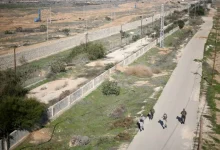



The proposal by Washington to establish an “economic zone” along the Lebanese-Israeli border, initially presented as an economic solution to the longstanding conflict, has quickly revealed its political and security dimensions. This initiative, linked to the legacy of former US President Donald Trump, aims to turn a volatile region into a model of stability through joint ventures. However, the feasibility of this “Trump economic zone” is being heavily questioned, particularly by Lebanese political analysts. The recent resumption of indirect negotiations between Lebanon and Israel, mediated by the United States, only underscores the intricacy of the situation.
المنطقة الاقتصادية المقترحة: هل هي حل أم وهم؟ (The Proposed Economic Zone: Solution or Illusion?)
The idea of a shared economic space isn’t new, but the current iteration faces significant obstacles. Discussions were initiated after a meeting in Naqoura on December 3rd, the first of its kind since 1983 to be led by civilians, and coordinated within the framework of the existing US-brokered ceasefire monitoring mechanism. The US envoy, Morgan Ortagus, joined Lebanese and Israeli diplomats in separate talks following military-level discussions. The initial focus centered on economic cooperation and rebuilding Lebanese areas damaged by prior conflicts. Ultimately, however, the overarching vision pointed to a zone free of Hezbollah and heavy weaponry – a condition proving profoundly challenging.
تعقيدات سلاح “حزب الله” والعقبات السياسية (Complications of Hezbollah’s Weapons and Political Obstacles)
One of the greatest hurdles to implementation is the presence of Hezbollah. Any progress hinges on addressing the issue of the party’s arms, particularly north of the Litani River. This remains a prerequisite demanded by Israel for any economic collaboration. However, as political analyst Emad Chidyaq points out, resolving the issue of Hezbollah’s weaponry effectively negates the need for the economic zone itself, as a stable state would naturally be able to assert its sovereignty.
Chidyaq, speaking to Al-Khalij Online, emphasized the inherent contradictions within the proposal. He argues that the project is being driven by individuals within the US administration lacking a deep understanding of the region’s complexities. The attempt to purchase land in Southern Lebanon, reportedly explored by US envoy Tom Barak, highlights the superficiality of the approach.
خطر التهجير وتداعياته الاجتماعية (The Risk of Displacement and its Social Consequences)
Beyond the security concerns, the proposed economic zone raises the specter of forced displacement. Establishing the zone would likely require either the evacuation of existing villages or the purchase of their properties. Chidyaq warns that this would amount to a practical process of displacement, unlikely to gain popular or political acceptance. Even if Lebanese authorities were to agree to the project in exchange for compensation or housing alternatives, it would inevitably create new internal tensions. The social fabric of Southern Lebanon is deeply rooted, and disrupting communities would have far-reaching consequences. This potential for تهجير السكان (population displacement) is a major point of contention.
السياق الأمني المتصاعد (The Escalating Security Context)
The renewed push for the economic zone coincides with a period of heightened tension. The assassination of Abu Ali al-Tabtabai, a senior Hezbollah military commander, in November 2023, by Israel, marked a significant escalation, representing the deepest strike into the Dahieh (Hezbollah’s stronghold) in years. Hezbollah responded by vowing to continue its resistance, effectively raising the stakes.
Despite the ceasefire agreement reached in November 2023 following a year of intense fighting, Israel continues to conduct daily raids on various areas in Lebanon, maintaining a military presence in five key positions in the South. Meanwhile, the Lebanese authorities have acknowledged a plan to disarm Hezbollah, a step the party vehemently rejects. Washington and Israel are actively pressing for the acceleration of this process, but it faces formidable internal opposition within Lebanon. The lack of الاستقرار السياسي (political stability) further complicates matters.
مواقف متضاربة وتاريخ من الفشل (Conflicting Positions and a History of Failure)
Lebanon’s official stance, as articulated by Nawaf Salam, attempts to balance diplomatic openness with a rejection of any normalization or peace agreement that isn’t part of a comprehensive regional process. This cautious approach reflects the deep-seated distrust and historical grievances that characterize the relationship between Lebanon and Israel.
Historically, following the Israeli invasion of Lebanon in 1982, similar negotiations led to the “May 17 Agreement,” which aimed to end the war and establish a liaison committee. While approved by the Lebanese Parliament, the agreement was subsequently annulled by the executive branch, demonstrating the fragility of any potential accord. The current situation echoes this past, highlighting the challenges of achieving a lasting resolution. The concept of التعاون الاقتصادي (economic cooperation), while appealing in theory, is inextricably linked to these broader political and security concerns.
الخلاصة: رؤية بعيدة المنال في ظل الظروف الراهنة (Conclusion: A Distant Vision in the Current Circumstances)
The proposed economic zone along the Lebanese-Israeli border, while presented as a pathway to stability and prosperity, appears largely unfeasible given the current realities. The deeply entrenched issue of Hezbollah’s weaponry, the potential for forced displacement, and the overall lack of political stability create insurmountable obstacles. As Emad Chidyaq rightly points out, security and political stability are prerequisites for economic development, not the other way around. The project, as it stands, seems to be a well-intentioned but ultimately misguided effort, lacking the necessary depth and understanding of the complex dynamics at play. Further dialogue and a more nuanced approach are crucial if any meaningful progress is to be made towards a lasting peace and economic cooperation in the region.